Workload
Students were asked to report information regarding their workload. This includes work from both paid/unpaid jobs, academic work, as well as time spent caregiving for any family members.
As a reminder, students had the option to select “Prefer not to answer” for all questions, and these responses were set as missing values. In addition, 18 (13.6%) students did not finish the survey. The n reporting refers to the total number of non-missing responses, while the percent reporting reflects the percent of non-missing responses.
Weekly Paid Work Hours
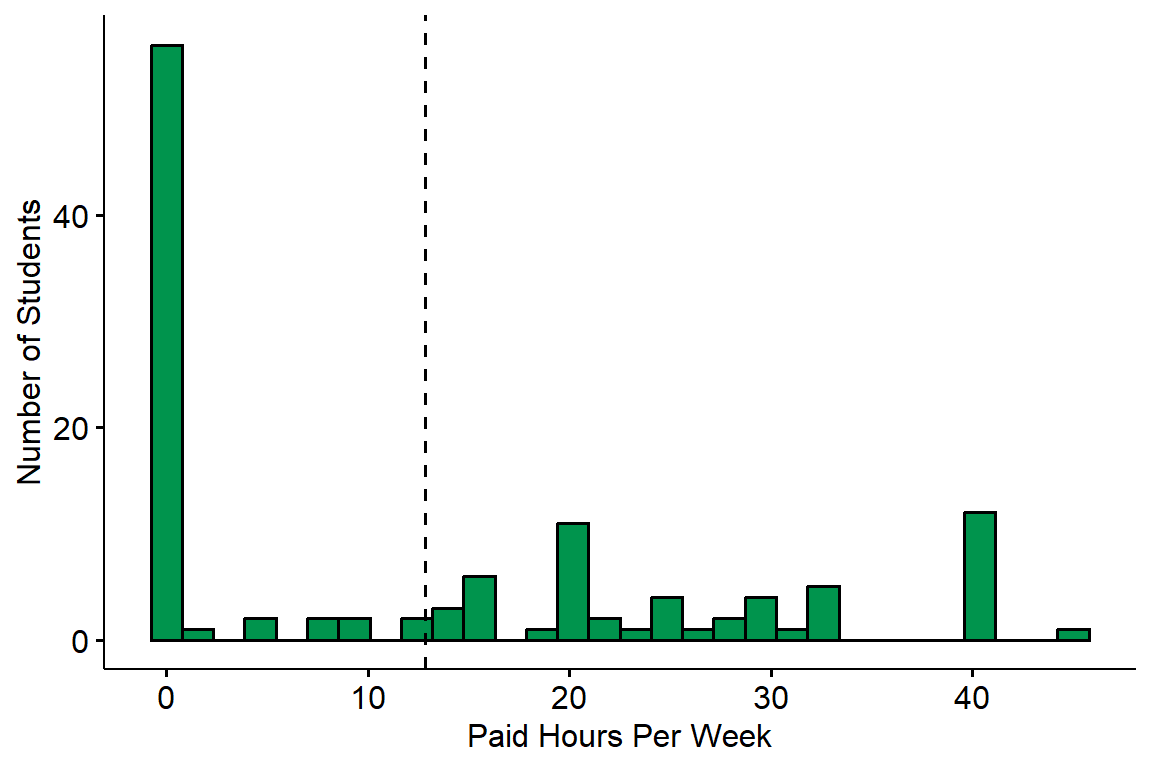
Survey Question: Estimate the number of hours you work in a PAID job (e.g. server at a restaurant, office assistant, etc.) or paid internship (e.g. training, shadowing, or practicum) per week.
Summary: Students reported a wide range of paid work hours per week with an average of 12.85 hours (denoted by the dotted line) and a median of 7. The majority of students worked either part-time or not at all. Only 13 (10.9%) students were considered to be working full-time (40 or more hours per week).
Impact of COVID
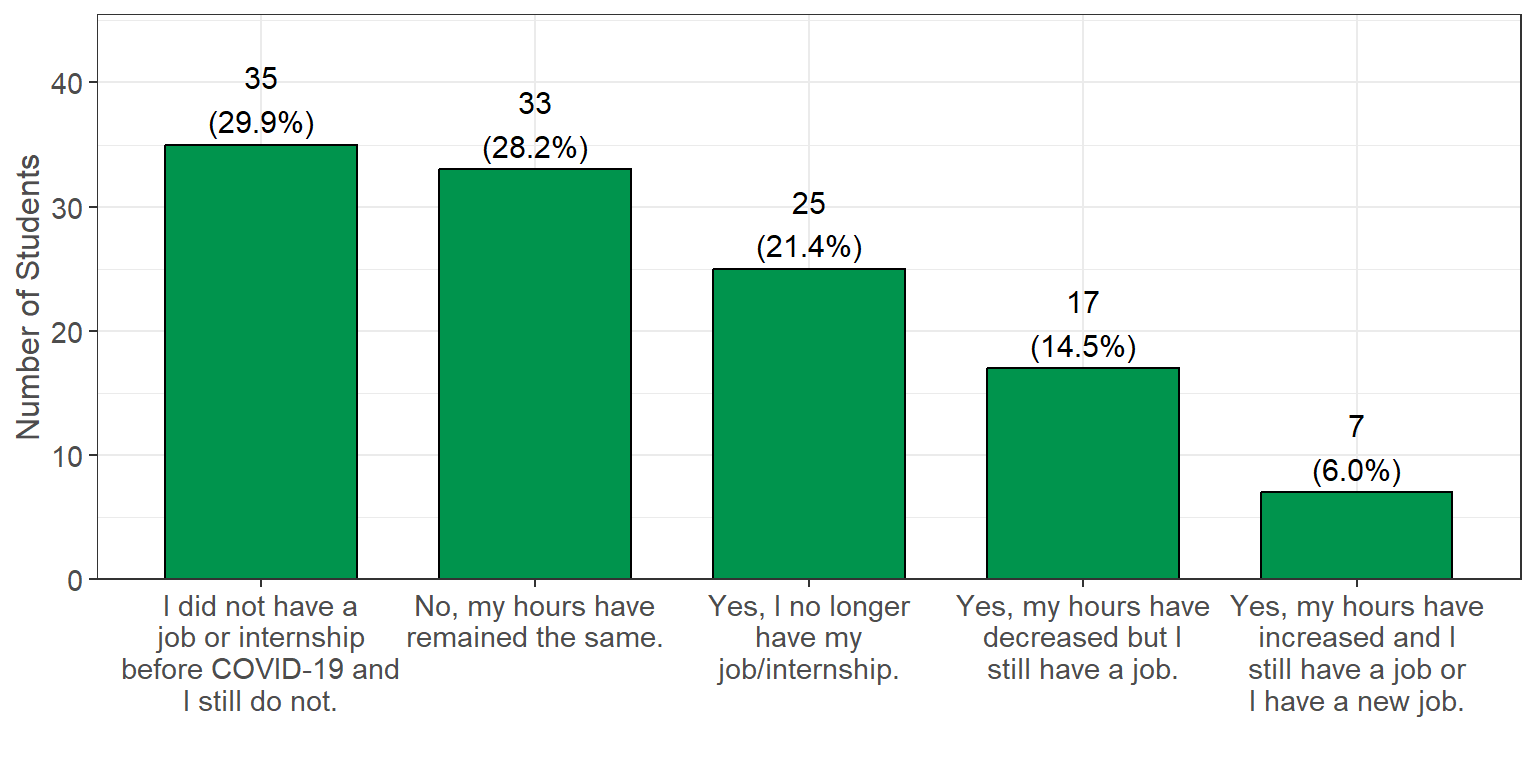
Survey Question: Have the hours you work in a PAID job or internship changed due to COVID-19?
Summary: A total of 35 (29.9%) students reported not working prior to COVID, while 33 (28.2%) reported that their hours have not changed due to COVID. There were 17 (14.5%) students that had their hours decreased, 25 (21.4%) that no longer had a job/internship, and 7 (6.0%) that had their hours increased.
Unpaid Work Hours
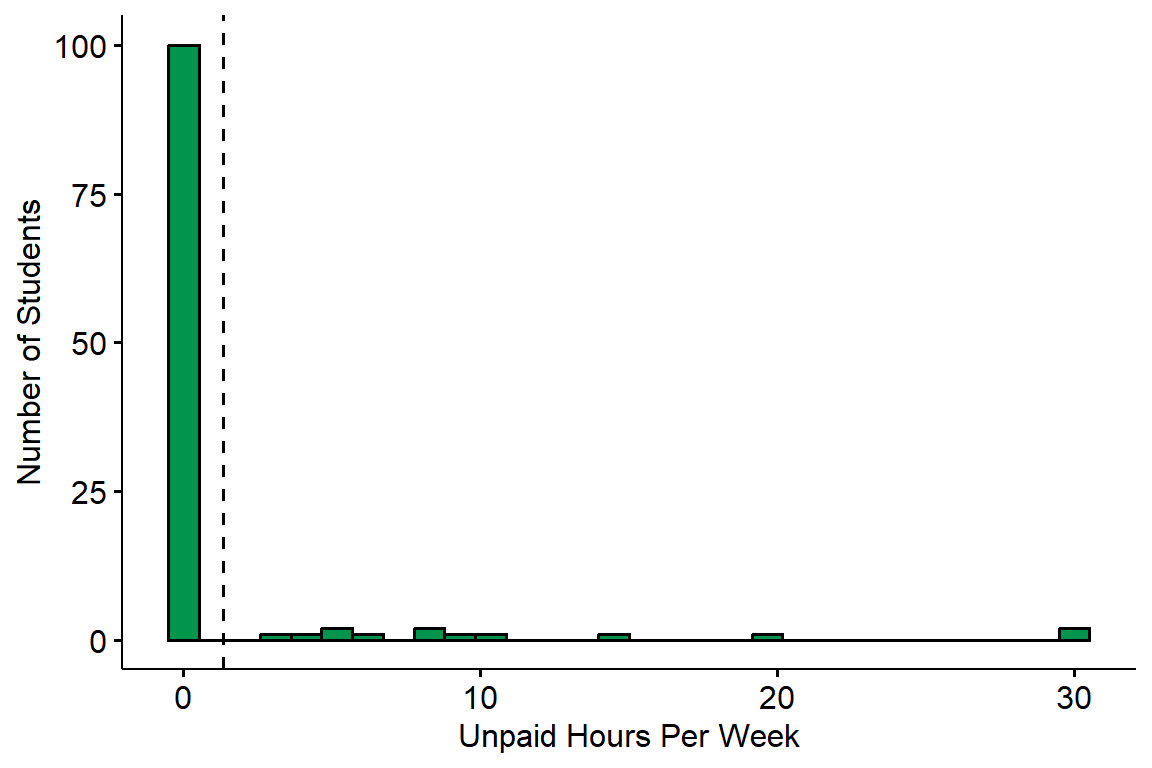
Survey Question: Estimate the number of hours you work in an UNPAID internship (e.g. training, shadowing, practicum, and/or volunteer, etc.) per week. Do not combine with answers above.
Summary: The average number of unpaid work hours was 1.3 (denoted by the dotted line) and the median was 0. A total of 100 (88.5%) students did not work at an unpaid job/internship, while 5 (4.4%) students reported working 10 or more unpaid hours every week.
Unpaid Caregiving Hours
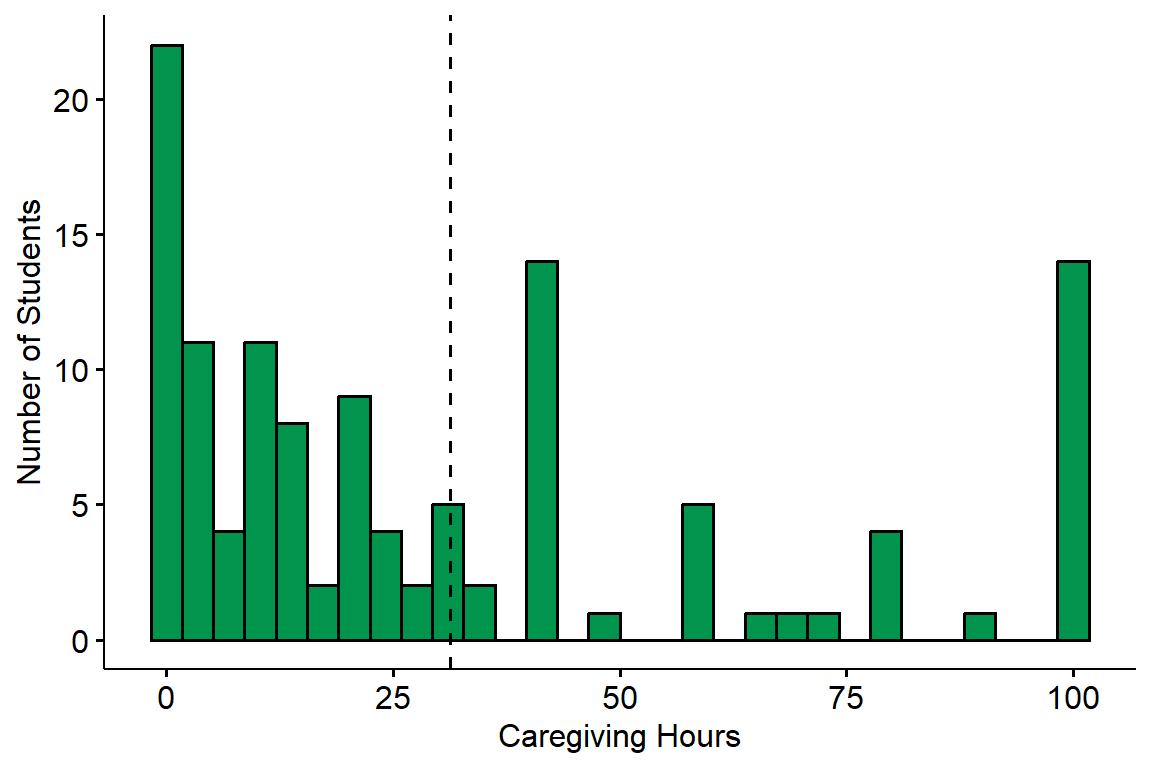
Survey Question: Estimate the number of hours you spend each week on UNPAID family obligations (e.g. taking care of younger siblings, preparing family meals, running errands for the family, etc.) per week.
Summary: A total of 100 (82.0%) students spent time each week caring for family members with an average of 31.24 hours (denoted by the dotted line) and a median of 20. There were 22 (18.0%) students that reported spending zero hours per week on family obligations, while 42 (34.4%) reported spending 40 or more hours each week.
Academic Workload
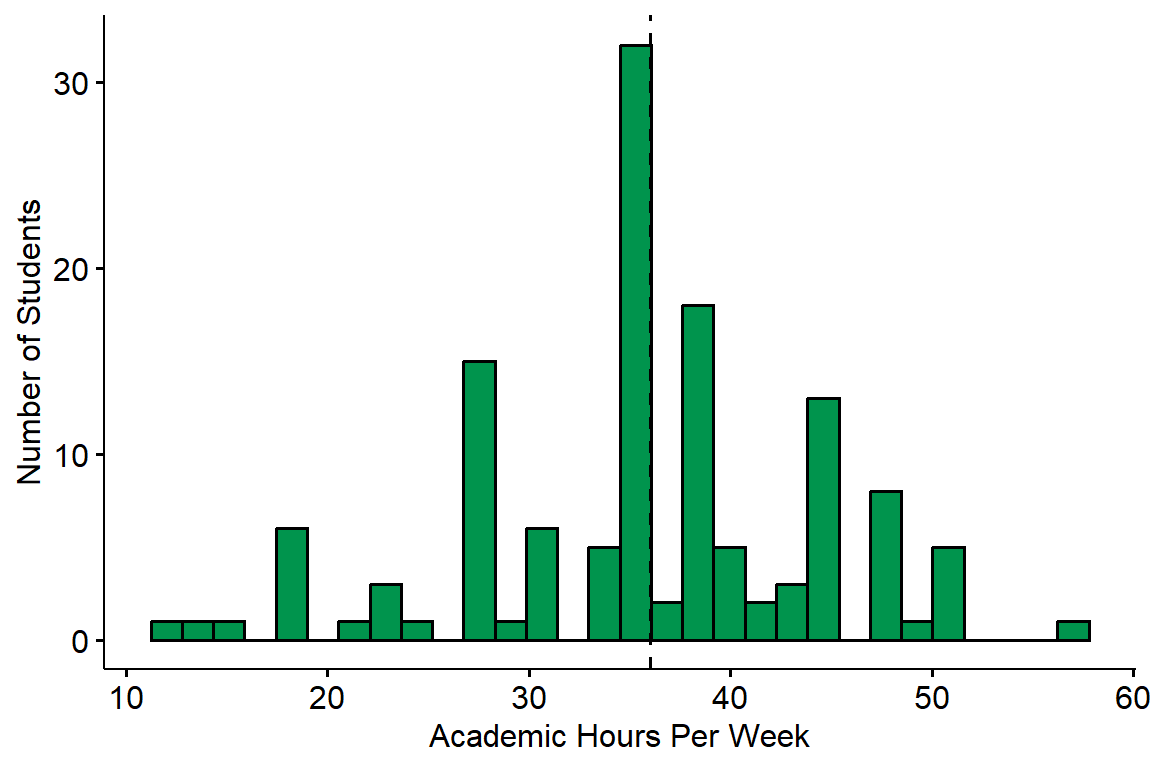
Survey Question: How many units are you currently taking?
Additional Notes: The hours of academic work per week were estimated by assuming 3 hours of work per unit.
Summary: The average number of academic hours worked per week was 36 hours (denoted by the dotted line), while the median was 36. A total of 38 (29.0%) students spent 40 or more hours per week on academic work.
Non-Academic Workload
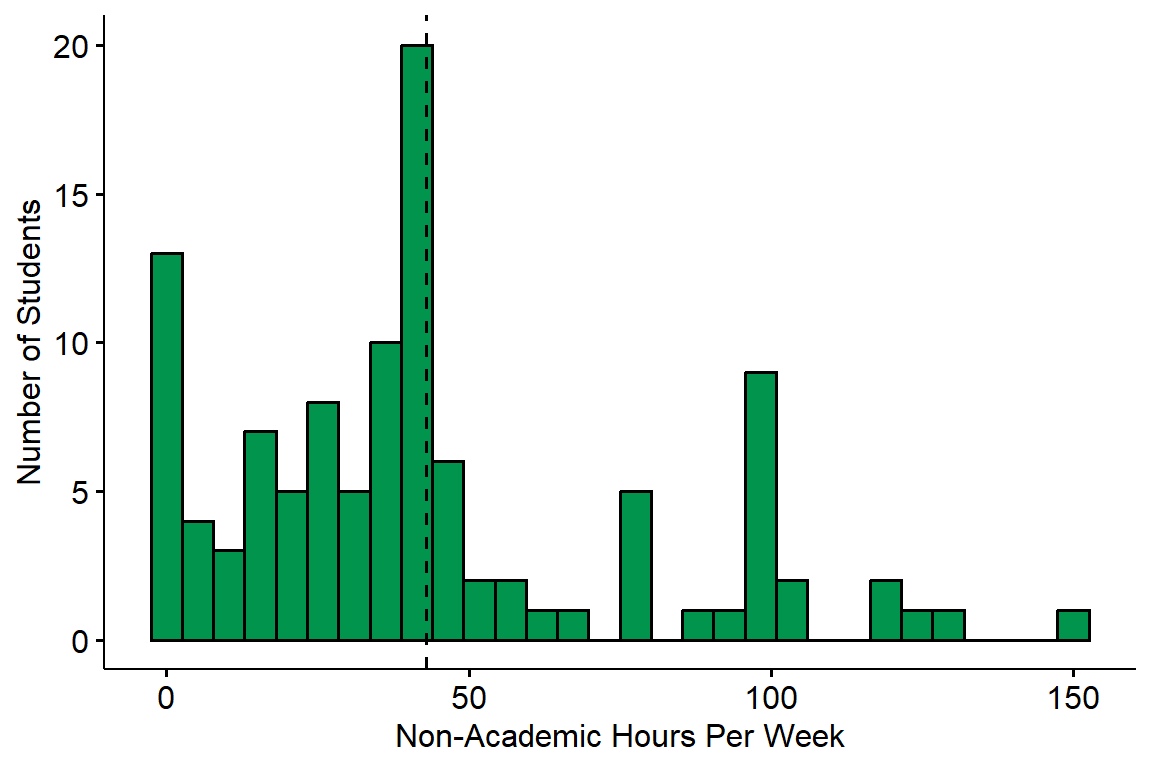
Survey Question: This variable was derived by taking the sum of students’ paid work hours, unpaid work hours, and caregiving hours.
Additional Notes: Non-academic workload was calculated only for students who reported their paid work hours, unpaid work hours, and caregiving hours.
Summary: The average total number of hours worked per week in non-academic matters was 43.02 hours (denoted by the dotted line), while the median was 38.5 hours. A total of 55 (50.0%) students spent 40 or more hours per week on non-academic work.
Total Workload
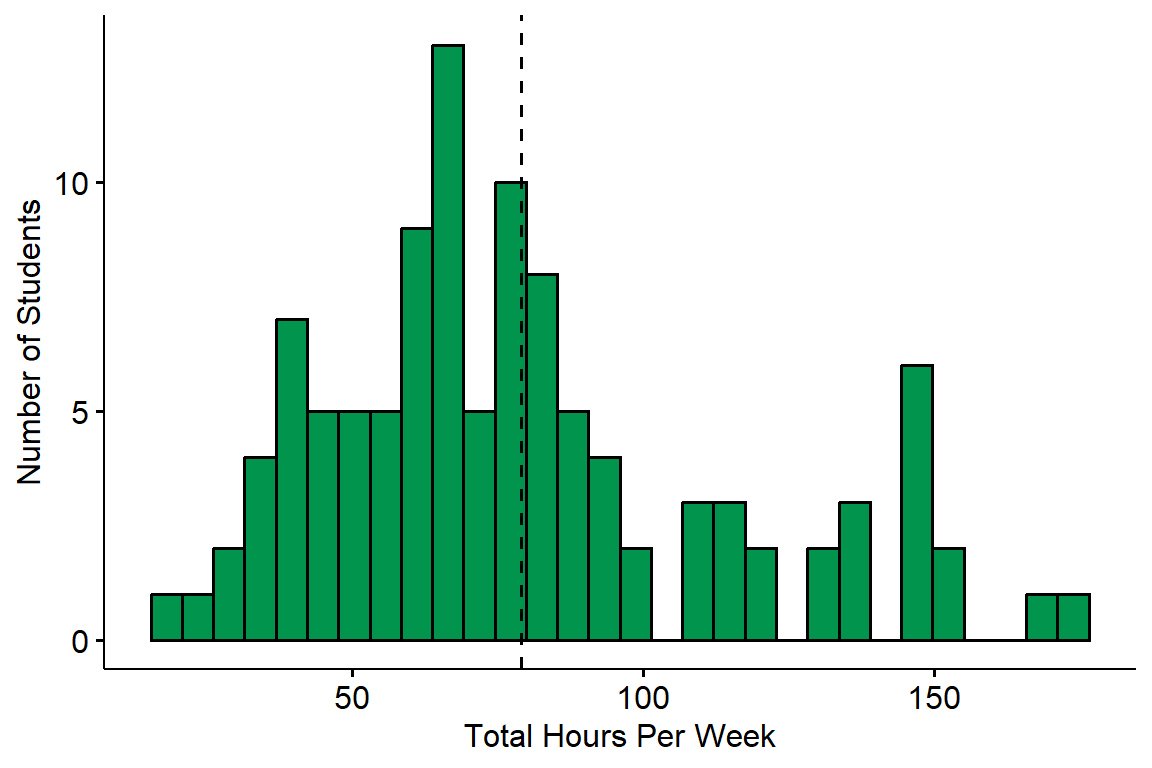
Survey Question: This variable was derived by taking the sum of students’ paid work hours, unpaid work hours, caregiving hours, and hours spent from academic activities (assuming 3 hours per unit taken).
Additional Notes: Total workload was calculated only for students who reported their paid work hours, unpaid work hours, caregiving hours, and units.
Summary: The average number of total hours worked per week was 78.95 hours (denoted by the dotted line), while the median was 72 hours. A total of 98 (89.9%) students spent 40 or more hours per week on academic and non-academic work, while 42 (38.5%) spent 80 or more hours.